Mosaics decorations, strictly following a theological-dogmatic thread, run along the naves, with a profound, poetical unity in spite of a stylistic which contrast an analytical realism with the severe abstractness of other forms.
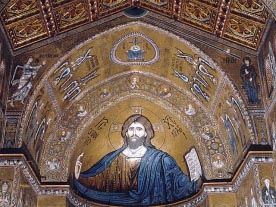 The over six thousand square metres of mosaics narrating the entire divine and human cycle of the world of God, were carried out, probably over the brief period of two years; Byzantine craftsmen worked alongside Sicilian ones, the latter having already elaborated their own style which was more realistic if compared with the Byzantine one.
 The grandiose cycle of the mosaics narration is composed of 130 panels and thousands of decorations and isolated figures which standing out from the gilded back-ground create an unimaginable and unreal phantasmagoria which draws the visitors' eyes to its focal point: the huge, severe and blessing Christ Pantocrator who occupies the whole surface of the apse.
Below this, among the numerous figures of saints, angels and apostles, there is, also, Saint Thomas Becket, archbishop of Canterbury.
This portrait is the only one known, carried out less than a generation from his death.
Probably, it was inspired by Jane of England, William II's wife, who had met him at the court of her father Henry II before his cruel murder, wanted successively by Henry II himself for the well known reasons.
The large arch of the Presbytery is the starting point of the mosaics cycle of narration which is developed along two levels with scenes expressing the theme of the Universal Salvation which is divided into five part: prologue, preparation, realization, continuation and epilogue.